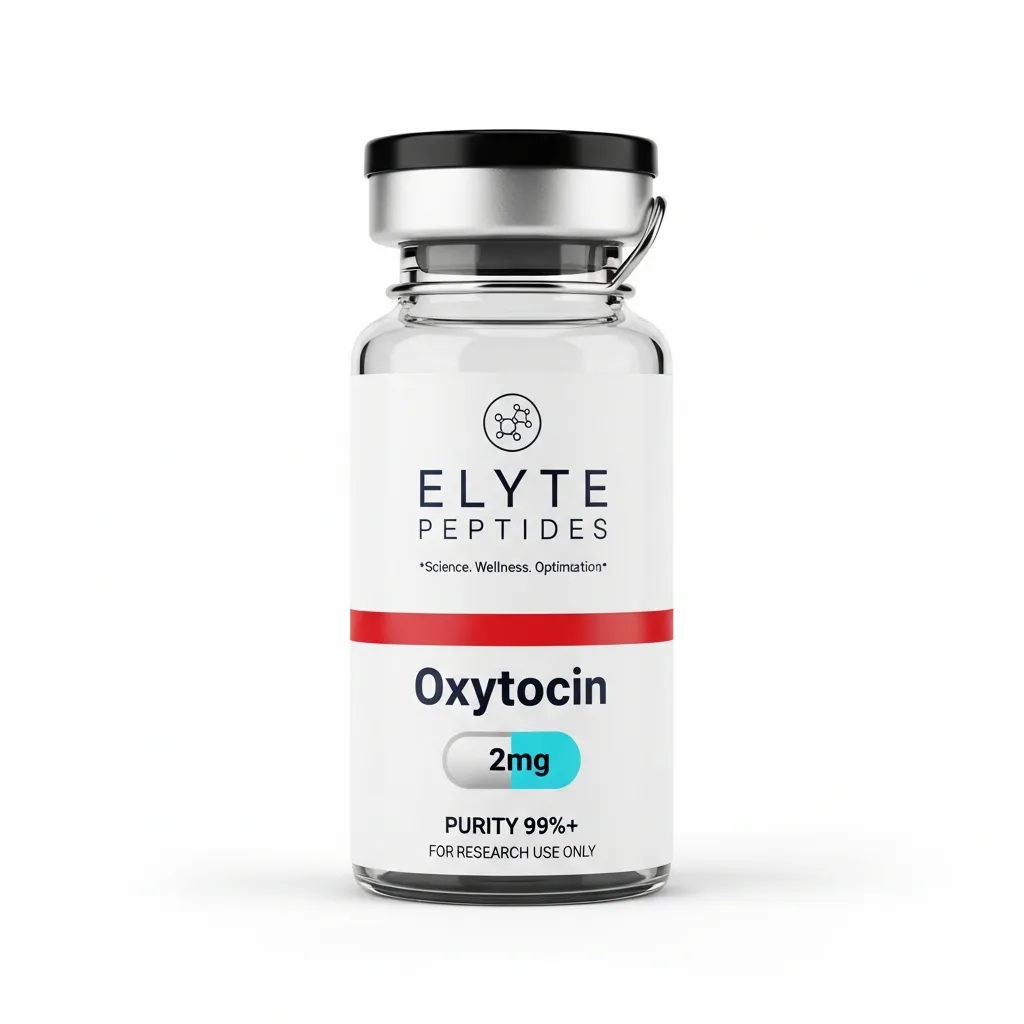
Oxytocin
Cyclic peptide hormone for social behavior and neuroscience research.
Description
Cyclic peptide hormone for social behavior and neuroscience research.
Oxytocin is a cyclic nonapeptide hormone (Cys-Tyr-Ile-Gln-Asn-Cys-Pro-Leu-Gly-NH2) with an internal disulfide bridge, naturally produced in the hypothalamic paraventricular and supraoptic nuclei and released from the posterior pituitary. It acts through the oxytocin receptor (OXTR), a G-protein coupled receptor expressed in the brain, uterus, mammary glands, cardiovascular tissue, and immune cells. Centrally, oxytocin modulates social bonding, trust, empathy, and anxiety through interactions with dopaminergic reward circuits and amygdala inhibition. Research by Kosfeld et al. (2005) published in Nature demonstrated that intranasal oxytocin administration increased trust behavior in human economic game paradigms, a landmark finding in social neuroscience. Studies in Biological Psychiatry by Hollander et al. showed that oxytocin improved emotion recognition and social cognition in autism spectrum models. Preclinical research published in Psychoneuroendocrinology indicated that oxytocin reduced cortisol responses and amygdala activation during stress exposure, suggesting anxiolytic properties mediated through limbic circuit modulation. Compared to vasopressin (ADH), which shares structural similarity differing by only two amino acids, oxytocin produces distinct behavioral and physiological effects. Vasopressin tends toward aggression and vigilance modulation, while oxytocin promotes prosocial behavior. Synthetic oxytocin analogues like carbetocin offer longer half-lives but altered receptor selectivity profiles. Oxytocin requires careful storage at -20°C in lyophilized form, as it is sensitive to oxidation and degradation. Reconstitute with bacteriostatic water and store at 2-8°C, using within 2-3 weeks due to its relatively fragile disulfide bond. This peptide is widely studied by social neuroscientists, psychiatrists researching autism and anxiety disorders, and reproductive biologists.
This product is supplied as a lyophilized powder and is intended for laboratory and research use only. Not for human consumption. Each vial contains 2mg of research-grade material.
Research Applications
- Social behavior and autism models
- Dopamine signaling and reward pathways
- Neuroplasticity and synaptic modulation
- Vasodilation studies
Specifications
- Size
- 2mg
- Purity
- ≥98% (HPLC)
- Form
- Lyophilized Powder
- Molecular Formula
- C43H66N12O12S2
- Molecular Weight
- 1007.193 g/mol
Storage & Handling
- Long-term storage: -20°C in a sealed, light-protected container
- Short-term storage: 2-8°C (refrigerated) for up to 30 days
- Reconstituted: Store at 2-8°C and use within 30 days
- Avoid: Repeated freeze-thaw cycles, direct sunlight, and moisture exposure
- Reconstitution: Use bacteriostatic water or sterile water for injection
Frequently Asked Questions
What is Oxytocin and how does it work?
What research has been done on Oxytocin?
How does Oxytocin compare to Vasopressin?
What is the recommended reconstitution protocol for Oxytocin?
What purity testing is performed on Oxytocin?
Related Products
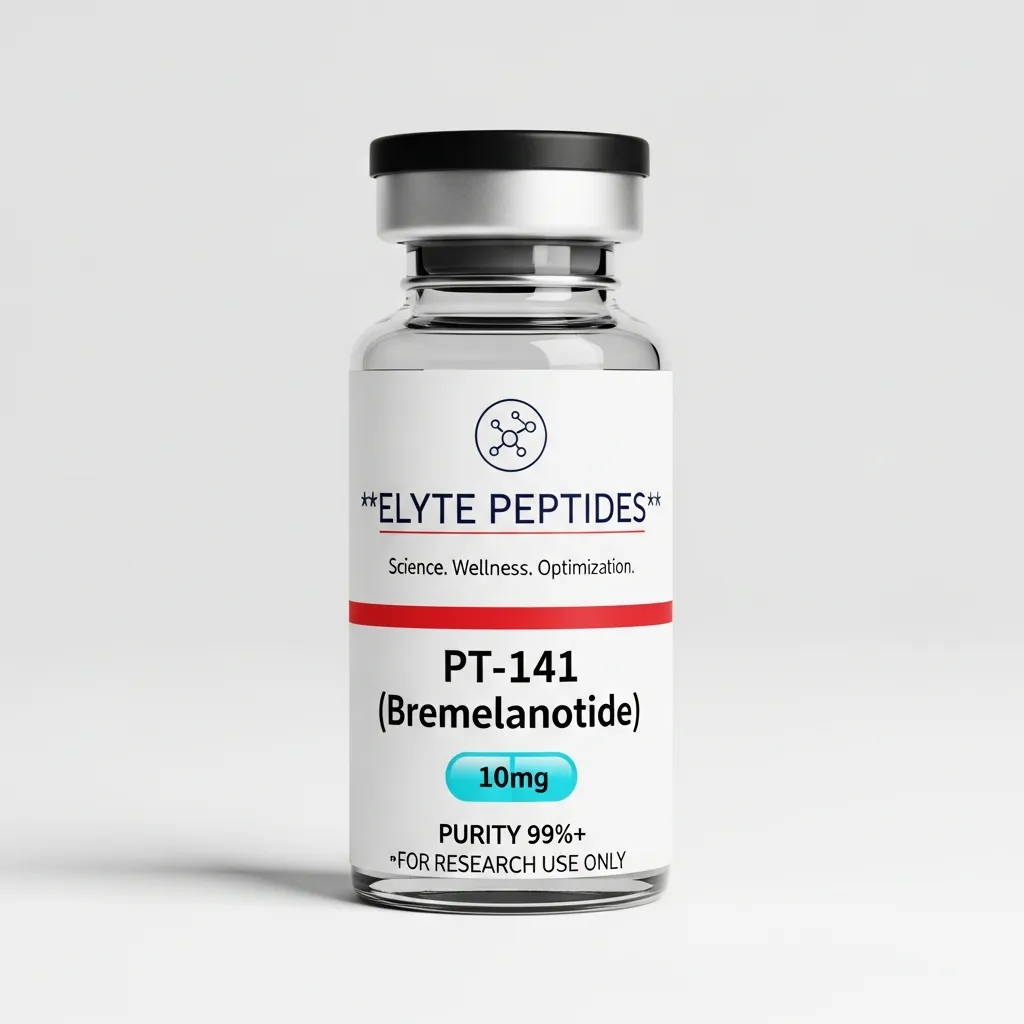
Research Use Only. This product is not intended for human consumption, therapeutic use, or diagnostic purposes. All peptides sold by Elyte Peptides are strictly for in-vitro research and laboratory use. By purchasing, you agree to use this product in compliance with all applicable laws and regulations.