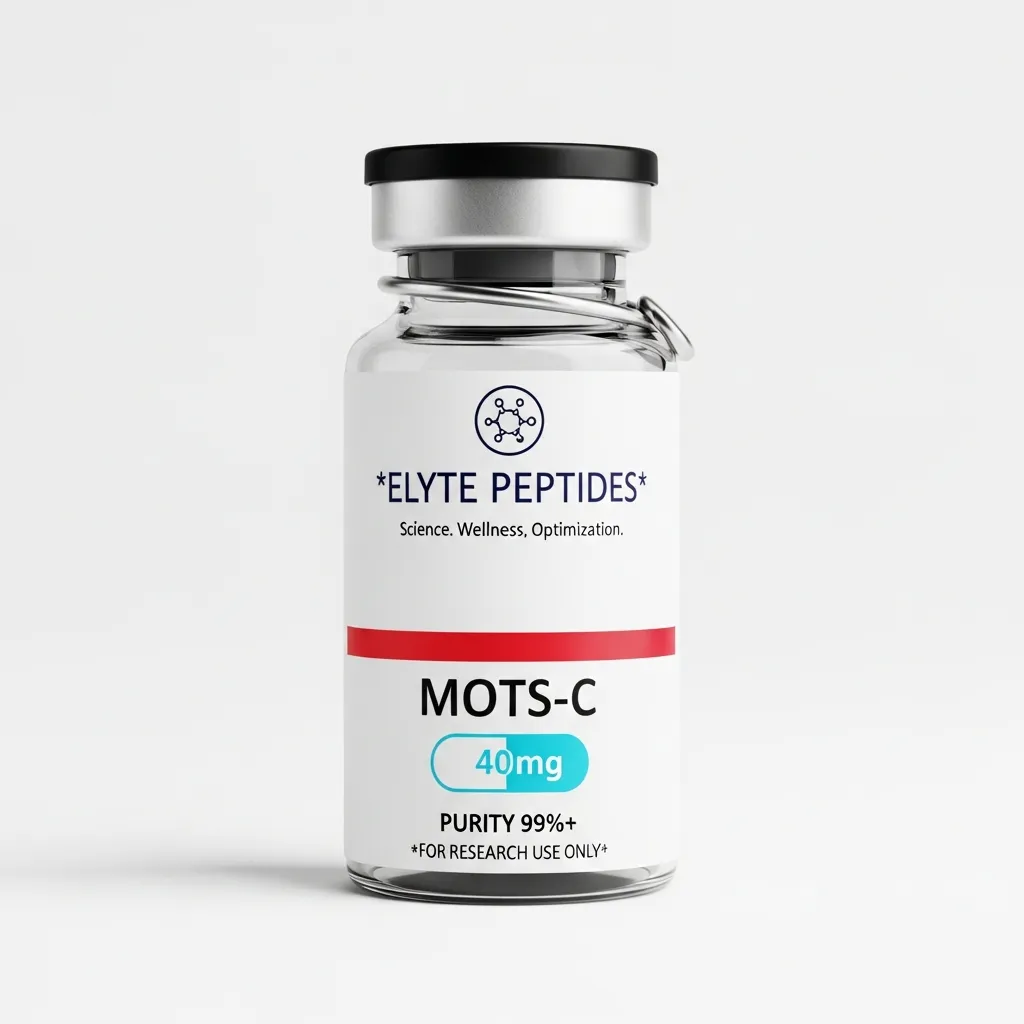
MOTS-C
Mitochondrial-derived peptide for metabolic regulation and cellular energy research.
Description
Mitochondrial-derived peptide for metabolic regulation and cellular energy research.
MOTS-c (Mitochondrial Open Reading Frame of the Twelve S rRNA type-c) is a 16-amino acid peptide encoded within the mitochondrial genome, specifically within the 12S rRNA gene. Its primary mechanism of action involves activation of the AMPK pathway, which regulates cellular energy homeostasis by promoting glucose uptake and fatty acid oxidation independent of insulin signaling. Research published by Lee et al. (Cell Metabolism, 2015) demonstrated that MOTS-c administration in diet-induced obese mice significantly improved glucose tolerance and reduced fat accumulation without altering food intake. Subsequent studies from the same USC laboratory showed that MOTS-c levels decline with age in human plasma, and that exercise increases circulating MOTS-c levels, suggesting it functions as a mitochondrial-derived exercise mimetic. Unlike traditional metabolic peptides that target specific membrane receptors, MOTS-c is unique in that it translocates to the nucleus under metabolic stress to regulate nuclear gene expression, particularly genes involved in the methionine-folate cycle and de novo purine biosynthesis. Compared to other mitochondrial-derived peptides like humanin, MOTS-c appears more specifically involved in metabolic regulation rather than cytoprotection. The lyophilized peptide should be stored at -20C and protected from light; reconstitute with bacteriostatic water and store reconstituted solutions at 2-8C for up to 21 days. MOTS-c is primarily researched by aging biology laboratories, exercise physiology departments, and mitochondrial medicine research centers investigating metabolic signaling peptides.
This product is supplied as a lyophilized powder and is intended for laboratory and research use only. Not for human consumption. Each vial contains 40mg of research-grade material.
Research Applications
- Glucose regulation and insulin sensitivity
- Skeletal muscle energy and endurance
- Fat oxidation and adipose tissue studies
- Longevity and age-related health research
Specifications
- Size
- 40mg
- Purity
- ≥98% (HPLC)
- Form
- Lyophilized Powder
- Molecular Formula
- C101H152N28O22S2
- Molecular Weight
- 2174.64 g/mol
- CAS Number
- 1627580-64-6
- Sequence
- Met-Arg-Trp-Gln-Glu-Met-Gly-Tyr-Ile-Phe-Tyr-Pro-Arg-Lys-Leu-Arg
Storage & Handling
- Long-term storage: -20°C in a sealed, light-protected container
- Short-term storage: 2-8°C (refrigerated) for up to 30 days
- Reconstituted: Store at 2-8°C and use within 30 days
- Avoid: Repeated freeze-thaw cycles, direct sunlight, and moisture exposure
- Reconstitution: Use bacteriostatic water or sterile water for injection
Frequently Asked Questions
What is MOTS-C and how does it work?
What research has been done on MOTS-C?
How does MOTS-C compare to Humanin?
What is the recommended reconstitution protocol for MOTS-C?
What purity testing is performed on MOTS-C?
Related Products

GLP3-R (Retatrutide)
Triple-agonist research peptide targeting GIP, GLP-1, and glucagon receptors for advanced metabolic studies.

Cagrilintide
Long-acting synthetic amylin analogue for obesity and metabolic research.

Tesamorelin
Synthetic GHRH analogue studied for visceral fat reduction and metabolic health.
Research Use Only. This product is not intended for human consumption, therapeutic use, or diagnostic purposes. All peptides sold by Elyte Peptides are strictly for in-vitro research and laboratory use. By purchasing, you agree to use this product in compliance with all applicable laws and regulations.