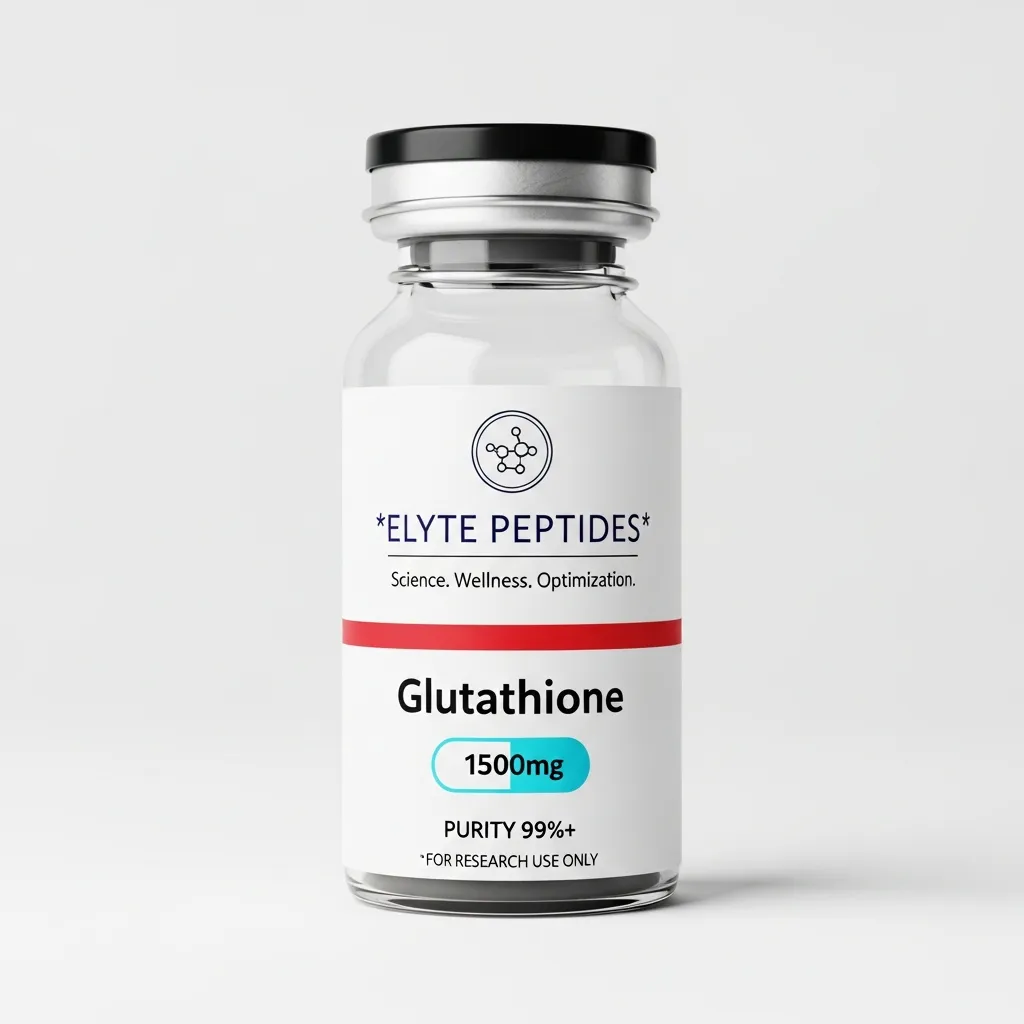
Glutathione
Master antioxidant tripeptide for cellular protection and detoxification research.
Description
Master antioxidant tripeptide for cellular protection and detoxification research.
Glutathione (L-gamma-glutamyl-L-cysteinyl-glycine) is an endogenous tripeptide and the most abundant intracellular antioxidant in mammalian cells. Its mechanism of action centers on the sulfhydryl group of its cysteine residue, which serves as an electron donor to neutralize reactive oxygen species (ROS) and reactive nitrogen species. Glutathione cycles between reduced (GSH) and oxidized (GSSG) forms via glutathione peroxidase and glutathione reductase enzymes, maintaining cellular redox homeostasis. Research published by Forman et al. (Molecular Aspects of Medicine, 2009) established glutathione's central role in phase II detoxification, where it conjugates with xenobiotics and electrophilic metabolites via glutathione S-transferases for hepatic clearance. Clinical studies have examined parenteral glutathione supplementation in various contexts including Parkinson's disease (Sechi et al., Progress in Neuro-Psychopharmacology, 1996), where intravenous glutathione showed preliminary improvements in motor function scores, though larger controlled trials have produced mixed results. Compared to oral glutathione supplementation, which suffers from poor bioavailability due to GI tract degradation, the injectable lyophilized form maintains peptide integrity for direct research applications. At 1500mg, this formulation supports high-dose research protocols examining oxidative stress conditions. Glutathione depletion is implicated in numerous disease models including neurodegeneration, liver injury, and immune dysfunction. Store lyophilized powder at -20C protected from light and moisture; reconstitute with sterile water immediately before use and do not store reconstituted solutions for extended periods. Glutathione is universally studied across virtually all biomedical research disciplines including hepatology, neuroscience, immunology, and toxicology departments worldwide.
This product is supplied as a lyophilized powder and is intended for laboratory and research use only. Not for human consumption. Each vial contains 1500mg of research-grade material.
Research Applications
- Neuroprotection and oxidative stress mitigation
- Hepatic detoxification studies
- Ocular health and cataract prevention
- Immune support under oxidative stress
Specifications
- Size
- 1500mg
- Purity
- ≥98% (HPLC)
- Form
- Lyophilized Powder
- Molecular Formula
- C10H17N3O6S
- Molecular Weight
- 307.33 g/mol
- CAS Number
- 70-18-8
Storage & Handling
- Long-term storage: -20°C in a sealed, light-protected container
- Short-term storage: 2-8°C (refrigerated) for up to 30 days
- Reconstituted: Store at 2-8°C and use within 30 days
- Avoid: Repeated freeze-thaw cycles, direct sunlight, and moisture exposure
- Reconstitution: Use bacteriostatic water or sterile water for injection
Frequently Asked Questions
What is Glutathione and how does it work?
What research has been done on Glutathione?
How does Glutathione compare to NAC (N-Acetyl Cysteine)?
What is the recommended reconstitution protocol for Glutathione?
What purity testing is performed on Glutathione?
Related Products
BPC Blend GLOW (BPC + GHK-Cu + TB-500)
Triple-peptide blend for cellular repair, skin regeneration, and anti-aging research.
GHK-Cu
Copper-binding tripeptide for skin regeneration and anti-aging research.
Snap-8
Synthetic octapeptide for dynamic wrinkle reduction research.
Research Use Only. This product is not intended for human consumption, therapeutic use, or diagnostic purposes. All peptides sold by Elyte Peptides are strictly for in-vitro research and laboratory use. By purchasing, you agree to use this product in compliance with all applicable laws and regulations.